© amazon.com 2011

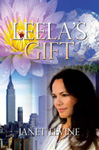
Agaat, Marlene van Niekerk’s latest novel  is worthy of being lauded as one of the great ones of any time and any place. Tolstoyan in its magnitude and impact, it is as ambitious in its themes as it is precise in its minutest details. Agaat, Dutch for Agatha, also meaning the Good, is the name given to an abused “colored” child taken from a wretched hovel on one farm in the Overberg where she clings to life, and whisked over a mountain pass by her benefactress, prototypical Afrikaner woman, Milla de Wet, to her farm, Grootmoedersdrift. The life blood of the novel is the flow and flux of the intimate, decades long love and hate they find in the essence of their own and each others’ psyches and souls. This symbiosis is intertwined with love of the earth and of Milla and her husband, Jak’s child, Jakkie. It interweaves fable, magical realism, earthy details of farming, power plays in relationships, communication that is beyond words yet shared in glances and silence, communion of the spirit. The cast is large, the emotional and psychological context larger. Van Niekerk is a poet as well as a novelist, and the language she creates sings the siren song of the place she grew up, a farm in the Overberg.

This is the song I sing as well. I first heard of this novel when I was driving in Massachusetts one afternoon on a late June day last summer. By happenstance I was listening to a NPR airing of an interview with Marlene van Niekerk about Agaat. The author’s name was vaguely familiar to me. I was instantly draw to the intonation of van Niekerk’s voice, how shy she seemed and yet at ease. She spoke impeccable English, although she writes and teaches in Afrikaans. A lifelong anti-apartheid activist I was intrigued that van Niekerk’s protagonist in Agaat was an Afrikaner and that the novel (at least on one level) describes the dissolution of apartheid from the perspective of a perpetrator of the infamous ideology. Months later I began to read the novel and was immediately drawn into Milla and Agaat’s world. Every reference, every intonation of every thought resonated deeply in my South African soul. Many times I was reading through tears. Agaat’s bed-time tale to little Jakkie that concludes the book was so powerful that it took me several attempts to read it through.

As the reviewer wrote in her New York Times review of the novel, it is for this sort of book that writers write and readers read.

Dankie Marlene, ek is baie trots.

Share


Tags: , , , , ,


Every year in my philosophy classes (high school seniors) when I teach Plato’s The Republic students grapple with Socrates’ notion of happiness. Before we reach that part of the text we do an exercise. As class begins and without any time to think about their response, I ask students to write down a 1 or 2 sentence definition of happiness. We each write our response on the board and consider the connections (or not) we can find. Here is a sample list in no particular order.

Happiness is the continual pursuit of life.

Happiness is the advancement of wholeness.

Happiness the fount of satisfaction.

Happiness is the freedom from reactivity.

Photo: © Janet Levine, Varanasi, 2007

Happiness is the balance of struggle and reward.

Happiness is nothing more and nothing less.

Happiness is love for self, others, and whatever circumstance arises.

Happiness is the uncontrollable feeling of contentment.

Happiness is doing what you want.

Happiness is having no regrets.

Happiness is the sensation felt in the body when a person acts according to what they believe is good.

Happiness is the state of personal, communal, and spiritual fulfillment.

Scanning the list one sees there are many sentiments both Socrates and the Buddha would commend. Did Socrates know of the Buddha’s teachings? There is no doubt about that in my mind. But that is a topic for another occasion. What does the Buddha say about happiness? Here is the Metta Sutra (teaching) of the Buddha.

“May all beings be happy and at their ease. May they be joyous and live in safety. All beings, omitting none, whether weak or strong; small or great; in high, middle or low realms of existence; near or far away; visible or invisible; born or to-be born. May all beings be happy and at their ease. Let none deceive another, or despise any being in any state. Let none wish harm to another. But even as a mother loves , watches over, and protects her child, her only child; so may all with a boundless mind cherish all living beings, radiating friendliness over the entire world without limit. May we cultivate a boundless goodwill, free from ill-will or enmity, and maintain the sublime abiding of this recollection.”

What is your definition of happiness? Use the comment form below. I am most interested to learn.

Share


Tags: , , , , , , , , , , , , ,