Apologies to my loyal readers for my lack of blogging activity in past months. Something has to give. Several months ago I began working with an editor on my latest fiction manuscript “Love Affair in the Shadow of Apartheid.” I have worked with many editors after decades of publishing, both as a journalist and book writer, and, thankfully, my current editor is an editor’s editor, in other words — a perfectionist. This means that the first round of reviews is an almost complete rewrite of the novel, paragraph by painstaking paragraph. Possibly if I had known how hard I would be working I may not have taken this on . . . However here we are in the penultimate and then hopefully ultimate  go-around and as my editor says, “It looks like a book now.”

A good editor makes a good writer; what a debt we owe editors. Maxwell Perkins, of Scribners, made the American “greats” of the 1920s and 1930s, well, great. Daphne duMaurier, the hugely popular British novelist of the 1940s and 1950s apparently turned in atrociously written drafts, but they encompassed unsurpassed modern Gothic story lines that her regular editor then turned into gold. There are many other examples of famous writer-editor duos.

With the ever-increasing pressure on writer’s to send agents publishing-ready quality manuscripts or for most writers to have ebook ready manuscripts, the editing business is booming. Daily editors thank Amazon and Kindle, Nook, Smashwords, and all other indie publishing and self-publishing ventures.

But for writers, for the hours and hours — day by day, week after week, month following month, and, often, for the years that go by — writing is a preposterous vocation, avocation, hobby, past-time. I have published four books but I have no idea what will happen to this latest creation. As I have written on this blog previously, publishing is undergoing a seismic shift.

It used to be that a well-written, competent novel would find the mid-list of most of the “big” publishers who wanted the cachet of publishing literary fiction. But now the “literary” tag is almost extinct among the vampires, romances, horrors, mysteries, young adults, chicks’ lit, and other genres. Literary is no longer a genre that is “in”, viable or relevant. And the world of ideas is poorer for this.

In this writer-editor go-around something has surprised me, how patient I have become. I am a Type-A personality, it all has to be done yesterday. But somehow now, possibly knowing that this lovingly nurtured creation so many months and years in gestation, may be still-born, has made the process as precious to me as the product. And that, in itself, perhaps, is truly a good thing.


Tags: , , , , , , , , , , ,


In the New York Times October 17, 2011 the following article appeared. I’ve been blogging on this topic for months, and obviously, the future is now here. This is a positive and welcome development for all writers.

Amazon Signs Up Authors, Writing Publishers Out of Deal

By
Published: October 16, 2011

SEATTLE — Amazon.com has taught readers that they do not need bookstores. Now it is encouraging writers to cast aside their publishers.

Heather Ainsworth for The New York Times

Laurel Saville’s memoir about her mother was self-published at first. It is scheduled to be published by Amazon next month.

Readers’ Comments

Amazon will publish 122 books this fall in an array of genres, in both physical and e-book form. It is a striking acceleration of the retailer’s fledging publishing program that will place Amazon squarely in competition with the New York houses that are also its most prominent suppliers.

It has set up a flagship line run by a publishing veteran, Laurence Kirshbaum, to bring out brand-name fiction and nonfiction. It signed its first deal with the self-help author Tim Ferriss. Last week it announced a memoir by the actress and director Penny Marshall, for which it paid $800,000, a person with direct knowledge of the deal said.

Publishers say Amazon is aggressively wooing some of their top authors. And the company is gnawing away at the services that publishers, critics and agents used to provide.

Several large publishers declined to speak on the record about Amazon’s efforts. “Publishers are terrified and don’t know what to do,” said Dennis Loy Johnson of Melville House, who is known for speaking his mind.

“Everyone’s afraid of Amazon,” said Richard Curtis, a longtime agent who is also an e-book publisher. “If you’re a bookstore, Amazon has been in competition with you for some time. If you’re a publisher, one day you wake up and Amazon is competing with you too. And if you’re an agent, Amazon may be stealing your lunch because it is offering authors the opportunity to publish directly and cut you out.

“It’s an old strategy: divide and conquer,” Mr. Curtis said.

Amazon executives, interviewed at the company’s headquarters here, declined to say how many editors the company employed, or how many books it had under contract. But they played down Amazon’s power and said publishers were in love with their own demise.

“It’s always the end of the world,” said Russell Grandinetti, one of Amazon’s top executives. “You could set your watch on it arriving.”

He pointed out, though, that the landscape was in some ways changing for the first time since Gutenberg invented the modern book nearly 600 years ago. “The only really necessary people in the publishing process now are the writer and reader,” he said. “Everyone who stands between those two has both risk and opportunity.”

Amazon has started giving all authors, whether it publishes them or not, direct access to highly coveted Nielsen BookScan sales data, which records how many physical books they are selling in individual markets like Milwaukee or New Orleans. It is introducing the sort of one-on-one communication between authors and their fans that used to happen only on book tours. It made an obscure German historical novel a runaway best seller without a single professional reviewer weighing in.

Publishers caught a glimpse of a future they fear has no role for them late last month when Amazon introduced the Kindle Fire, a tablet for books and other media sold by Amazon. Jeffrey P. Bezos, the company’s chief executive, referred several times to Kindle as “an end-to-end service,” conjuring up a world in which Amazon develops, promotes and delivers the product.

For a sense of how rattled publishers are by Amazon’s foray into their business, consider the case of Kiana Davenport, a Hawaiian writer whose career abruptly derailed last month.

In 2010 Ms. Davenport signed with Riverhead Books, a division of Penguin, for “The Chinese Soldier’s Daughter,” a Civil War love story. She received a $20,000 advance for the book, which was supposed to come out next summer.

If writers have one message drilled into them these days, it is this: hustle yourself. So Ms. Davenport took off the shelf several award-winning short stories she had written 20 years ago and packaged them in an e-book, “Cannibal Nights,” available on Amazon.

When Penguin found out, it went “ballistic,” Ms. Davenport wrote on her blog, accusing her of breaking her contractual promise to avoid competing with it. It wanted “Cannibal Nights” removed from sale and all mentions of it deleted from the Internet.

Ms. Davenport refused, so Penguin canceled her novel and is suing her to recover the advance.

“They’re trying to set an example: If you self-publish and distribute with Amazon, you do so at your own risk,” said Jan Constantine, a lawyer with the Authors Guild who has represented Ms. Davenport.

The writer knows her crime: “Sleeping with the enemy.” Penguin declined to comment.

If some writers are suffering collateral damage, others are benefiting from this new setup. Laurel Saville was locked out by the old system, when New York publishers were the gatekeepers. “I got lots and lots of praise but no takers,” said Ms. Saville, 48, a business writer who lives in Little Falls, N.Y.

Two years ago she decided to pay for the publication of her memoir about her mother’s descent from California beauty queen to street person to murder victim. She spent about $2,200, which yielded sales of 600 copies. Not horrible but far from earth-shaking.

Last fall, Ms. Saville paid $100 to be included in a Publishers Weekly list of self-published writers. The magazine ended up reviewing her memoir, giving it a mixed notice that nevertheless caught the attention of Amazon editors. They sent Ms. Saville an e-mail offering to republish the book. It got an editorial once-over, a new cover and a new title: “Unraveling Anne.” It will be published next month.

Ms. Saville did not get any money upfront, as she would have if a traditional publisher had picked up her memoir. In essence, Amazon has become her partner.

“I assume they want to make a lot of money off the book, which is encouraging to me,” said Ms. Saville, who negotiated her deal without an agent.

Her contract has a clause that forbids her from discussing the details, which is not traditional in publishing. The publicity plans for the book are also secret.

Can Amazon secretly create its own best sellers? “The Hangman’s Daughter” was an e-book hit. Amazon bought the rights to the historical novel by a first-time writer, Oliver Pötzsch, and had it translated from German. It has now sold 250,000 digital copies.

“The great and fascinating thing about Amazon’s publishing program is that there can be these grass-roots phenomena,” said Bruce Nichols of Houghton Mifflin Harcourt, which republished the novel this summer.

Ms. Saville no longer even contemplates a career with a traditional publisher. “They had their shot,” she said. She is now writing a novel. “My hope is Amazon will think it’s wonderful and we’ll go happily off into the publishing sunset,” she said.

A version of this article appeared in print on October 17, 2011, on page A1 of the New York edition with the headline: Amazon Signing Up Authors, Writing Publishers Out of Deal


Tags: , , , , , ,


Yesterday I opened a Twitter account @jlevinegrp.

This is a big step. For months now many of my valued blog readers have asked me if I have a Twitter account so they can become a follower. So now I can shout out, “Yes, I do. Hope to connect with you.” Several factors coincided to move me to act now. The first is already stated. I am so grateful to all my blog readers and those who take the time to leave comments on the blogs. One hundred and ten thousand of you in the last three months! Thank you for being so loyal and proactive. Not all the comments make it onto the blogs, maybe I am too discerning a censor? I approve comments from people who use a personal name (as opposed to a business label), I try to catch and trash all the porn and references to porn, and political or other, propaganda. Unfortunately I can’t approve those in a language other than English (I don’t know what they contain) but do approve the occasional comment in French. If someone left a comment in Afrikaans or Dutch, I can respond to those, too.

Secondly, the pressure and temptation to be a member of a social network is overwhelming. I am a social person, I love forging connections, networking, and as I wrote in a previous blog, we live now largely  in a brave new world on a LCD lit screen that we hold on our hands, balance on our laps or spend hours with on our desks. Addiction, did anyone say the word, addiction? This pressure only increased when recently I received an e-mail from an older friend, whom I mentioned in that same blog as being an unlikely kindle owner, asking me to be her friend on Facebook. This was a revelation to me and I decided (as they say) that I had better get with the program.

Continue Reading


Tags: , , , , , , , , , , , , , , , , , ,


“If only there was a cure for unhappiness.”

The other day someone spoke those words to me accompanied by a heartfelt sigh. Unhappiness is a burden we carry at times and it can be debilitating. Is there a cure? It is easier to contemplate the idea that we cause much of our unhappiness by attaching so much energy and attention to the cause—loss, unwelcome change, illness, our own or that of someone we are close to, disappointment and so on—than to change our state of mind about the situation. Yet change our attitude is exactly what we need to do. As Hamlet in the famous Shakespeare play of the same name says, “There is nothing good or bad but thinking makes it so.” Here are some proven “cures.”

Continue Reading


Tags: , , , , , , , , , , , , , , , ,


What is Time? Such a seemingly simple question but it can lead to intensely elusive searches for a concept that defies easy answers. Sure we have schedules, and clocks, and calendars based by our ancient forebears on their observations of the wheeling stars and planets. But we also have so many postulations by so many philosophers and cosmologists and various scientists that one’s head can spin from it all. What is Time? Some say Time is a synonym for God. Others that Time is change. Saint Augustine said a thousand years ago, “Intuitively I know what time is, but if you ask me to explain time to you I cannot do so.” What is Time? If all human life disappeared from this planet would Time cease to exist? In other words does our consciousness conceive of Time or does it exist whether we are here or not?

A woman in Soweto, South Africa, a tour guide for a group of harried Americans, wanted to stop at a museum but was asked “Do we have time?” She answered, “I don’t know if you have time. I know you have watches…and I know I have time.”

T.S. Eliot one of the most famous poets of the twentieth century wrote one of his master works The Four Quartets as an exploration into Time. In Burnt Norton, one of the quartets he writes, “Time present and time past/Are both perhaps present in time future/And time future contained in time past./…all time is eternally present…”

All time is eternally present. What you need to know is that Eliot studied Eastern spirituality as an undergraduate at Harvard and had in depth knowledge of the teachings of the Buddha. One of the Buddha’s seminal teachings is that Time is an unceasing succession of transient nanoseconds through which our lives pass and of which passage we need to be aware as our ephemeral future so rapidly becomes our fleeting past. Or in other more colloquial words we need to live in the present moment. Not the past. Not the future. But the present moment. To be truly alive we need to bring all our attention and awareness to every moment of our lives: to our loves, our activities, our preoccupations, our commute, to our emotions, to eating, bathing and on and on. Then perhaps we can begin to understand what Time is and what Time is not.


Tags: , , , , , , , , , , , , , , , , , ,


In July I treated myself to an adventure I had long day-dreamed of taking: to see some of the great gardens of south-east England. It was a treat, a veritable sensory feast. England, and all of Great Britain of course, is a history and literary theme park. Every town and hamlet has old manor houses, historic churches, celebrated battle fields, ruined castles, and ancient abbeys. A lover of English literature I chose a tour that centered on the gardens of horticulturists, writers and artists. Everything about the trip was a highlight, but there were highlights of the highlights. Here are three:

Chartwell — the home of Winston and Clementine Churchill and their children. It is the second most visited site in Britain and redolent with history. It is a homey and comfortable house and the photographs tell the story as no book of potted TV series can, of the immense role this man and his wife played in shaping the destiny of our planet during the first half of the last century. The Weald welcomes one and from the terrace one can see for twenty miles across forests and fields. As I stood and gazed I am sure that I like many thousands of others couldn’t help but think of the famous men and women who had stood there too.

Hatfield House — home to Henry VIII’s three children including the future queen, Elizabeth. To see the Elizabethean knot garden in front of the ruins of the original house and wander in the ascension garden where Elizabeth first heard of her ascension to the throne of England is truly to walk in the footsteps of history.

There is Petworth with its original Chaucer manuscript of “The Canterbury Tales”. The idyllic hamlet of Bosham on the coast near Portsmouth, with a tiny church that reputedly was the place where King Canute worshipped, and which is featured on the Bayeaux tapestries. The gardens of reknown horticulturists Beth Catto and Christopher Lloyd. Charleston the farmhouse and gardens of Vanessa Bell (artist sister of Virginia Woolf) and keystone of the Bloombsbury circle.

And then there is the garden at Sissinghurst, the creation of diplomat Harold Nicholson and his literary wife Vita Sackville-West. There is nothing I can say about Sissinghurst that is not a superlative. Here are two photographs that speak for themselves, one a plant  astrantia major from Vita’s famous white garden and the other of “my pink tower” as she called the centuries old tower that houses her writing/sitting room filled everyday with fresh flowers, as if patiently anticipating her return. Magic. Like the entire two-week experience.

© 2010 Janet Levine, White Garden, Sissinghurst

© 2010 Janet Levine, Sissinghurst


Tags: , , , , , ,


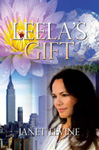
My new book, a novel, “Leela’s Gift” has been released. In fact it can be viewed at http://lulu.com/spotlight/JLevine1. It will soon be (early August) available at amazon.com and many online venues where book are sold as well as in book stores (remember www.indiebound.org and independent book stores). “Leela’s Gift” is the story of a luminous inner spiritual  journey. It is set in New York and high in the Himalayas near Darjeeling in northern India. The novel uncovers archetypal and highly relevant spiritual teachings. East meet west in Leela. The book offers teachings on meditation and yoga,  practical paths to freedom from the often dispiriting and desperate quality of our contemporary lives. The novel intertwines Leela’s journey with modern philosophy  and primal wisdom and is infused with some of the inner teachings of Buddhism and the Enneagram. “Leela’s Gift” tells a story as old as the human heart.


Tags: , , , , , , , , , , , , , , , , , , , , , ,